
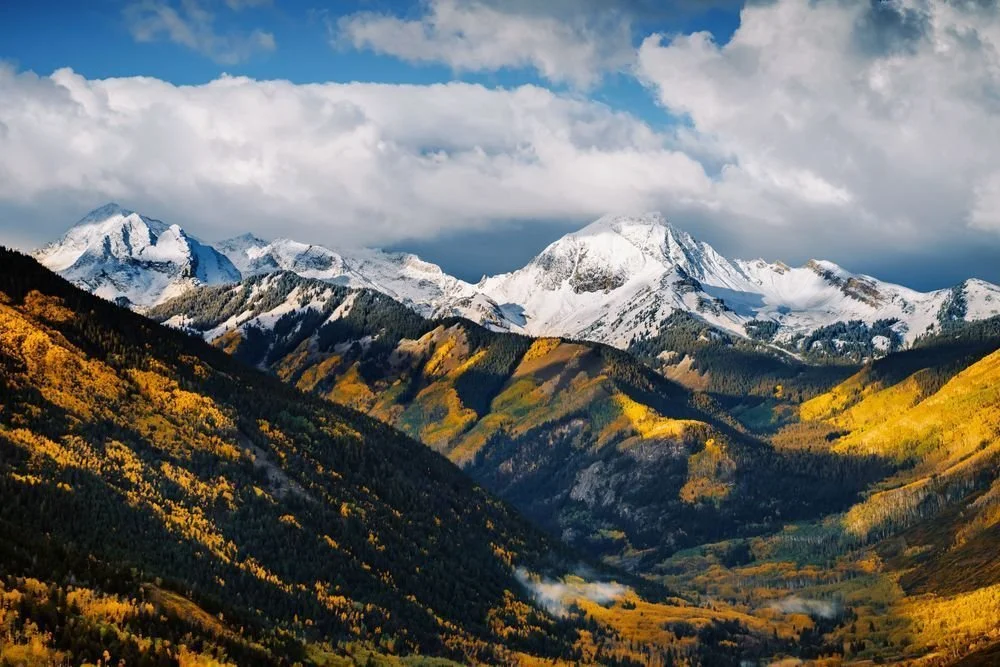
Fall is one of the most spectacular times to photograph Aspen and Snowmass. For a few short weeks each year, the mountainsides transform from green to brilliant shades of yellow, orange, and gold, creating some of the most photogenic landscapes in Colorado.
After more than a decade of photographing the Aspen and Snowmass area, fall remains one of my favorite, and most unpredictable seasons to photograph. Peak color can vary from year to year, weather can change quickly, and sometimes the best photographs happen under conditions you weren't expecting.
Here are a few of my favorite tips for photographing fall colors in Aspen and Snowmass
1. Photograph Early and Late in the Day
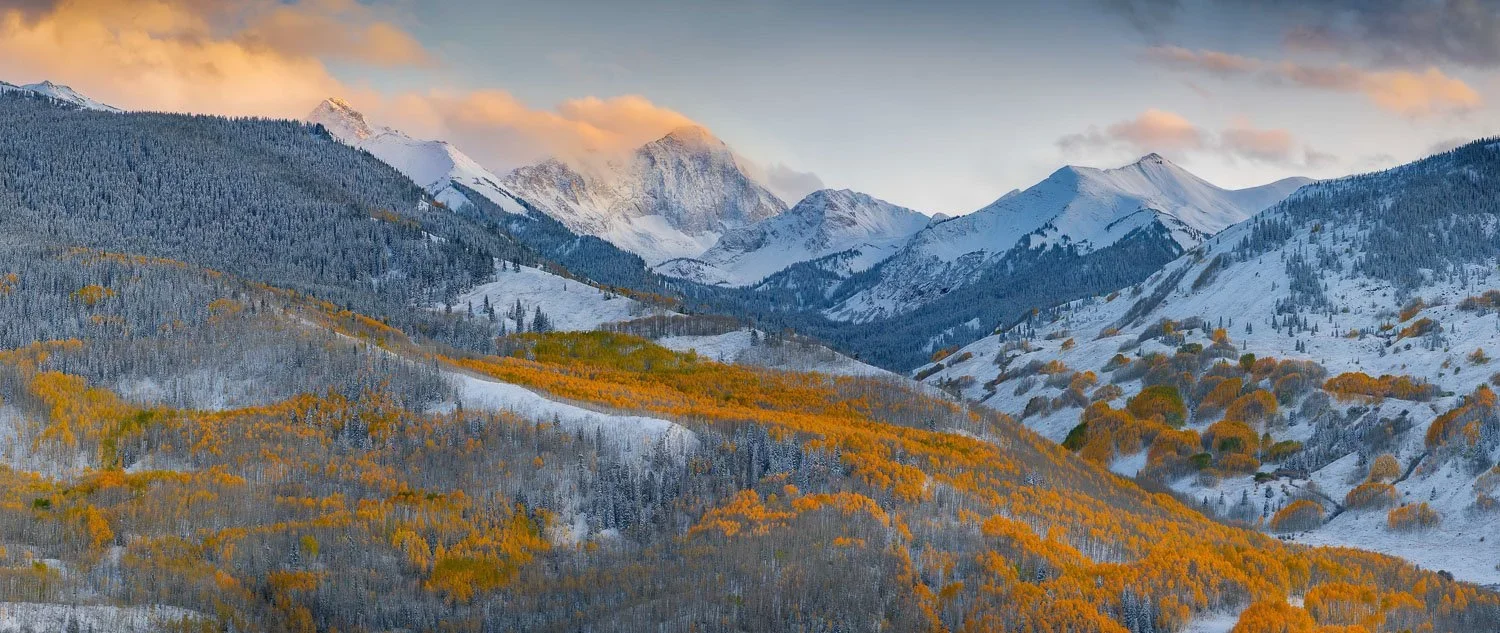
Golden hour is particularly beautiful during fall. Early morning and late afternoon light can illuminate aspen leaves and bring out their warm yellow and orange tones while creating depth and contrast across the mountains.
But don't put your camera away when golden hour ends. Blue hour can create a beautiful contrast between cool mountain shadows and warm fall foliage, particularly after sunset.
Cloudy days are also worth photographing. Soft, diffused light reduces harsh shadows and can make the colors of the leaves appear especially rich.
2. Use Backlight to Make Aspen Leaves Glow
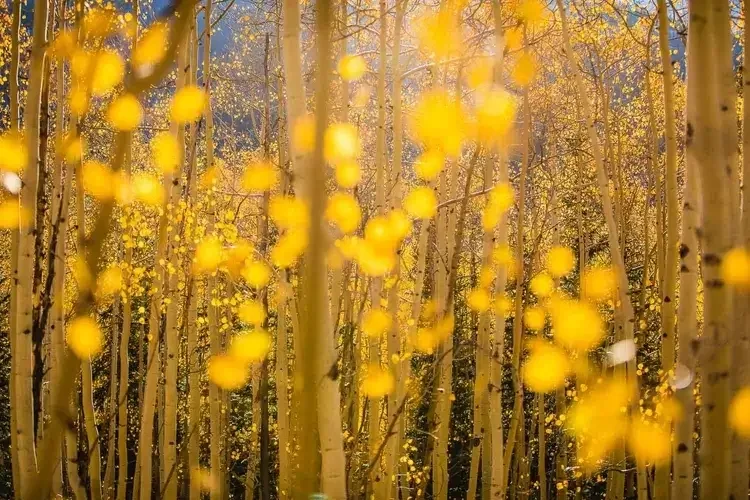
One of my favorite ways to photograph aspens is with the sun behind the leaves. Aspen leaves are thin enough that sunlight can pass through them, making an otherwise ordinary grove appear to glow.
Try positioning yourself so the sun is partially hidden behind a tree trunk or just outside your frame. This can give you beautiful illuminated leaves without overwhelming the image with direct sunlight.
3. Don't Just Photograph the Big View
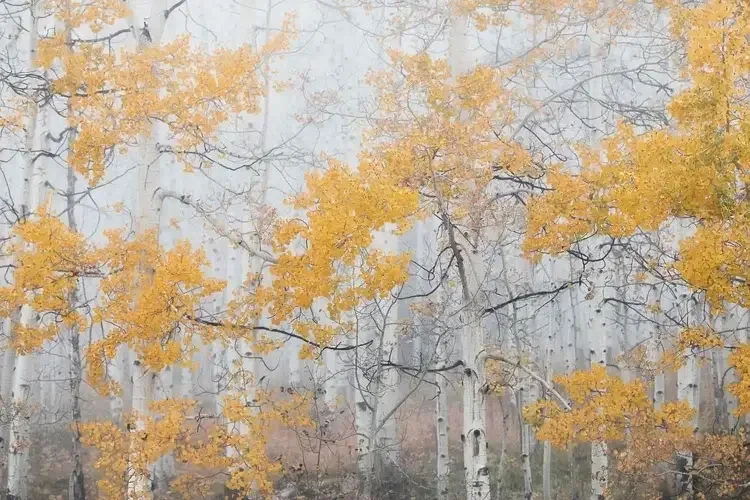
It's easy to focus on sweeping mountainsides covered in golden aspens, but some of my favorite fall photographs are much more intimate.
Look for individual leaves, patterns in the trunks, contrasting colors, winding trails, reflections, or small areas where light is hitting the trees.
When hiking the trails around Snowmass, I constantly move between looking at the landscape as a whole and looking for smaller scenes within it.
4. Use Trails to Lead the Viewer Into the Photograph

Trails are one of my favorite compositional tools when photographing fall in Snowmass. A winding trail disappearing through an aspen grove naturally leads the viewer's eye deeper into the image.
Instead of always photographing straight toward the trees, look for curves, switchbacks, and openings in the forest that create layers within the photograph.
Including a hiker, runner, or mountain biker can also add scale and help tell the story of being in the landscape rather than simply looking at it.
5. Bring More Than a Wide-Angle Lens
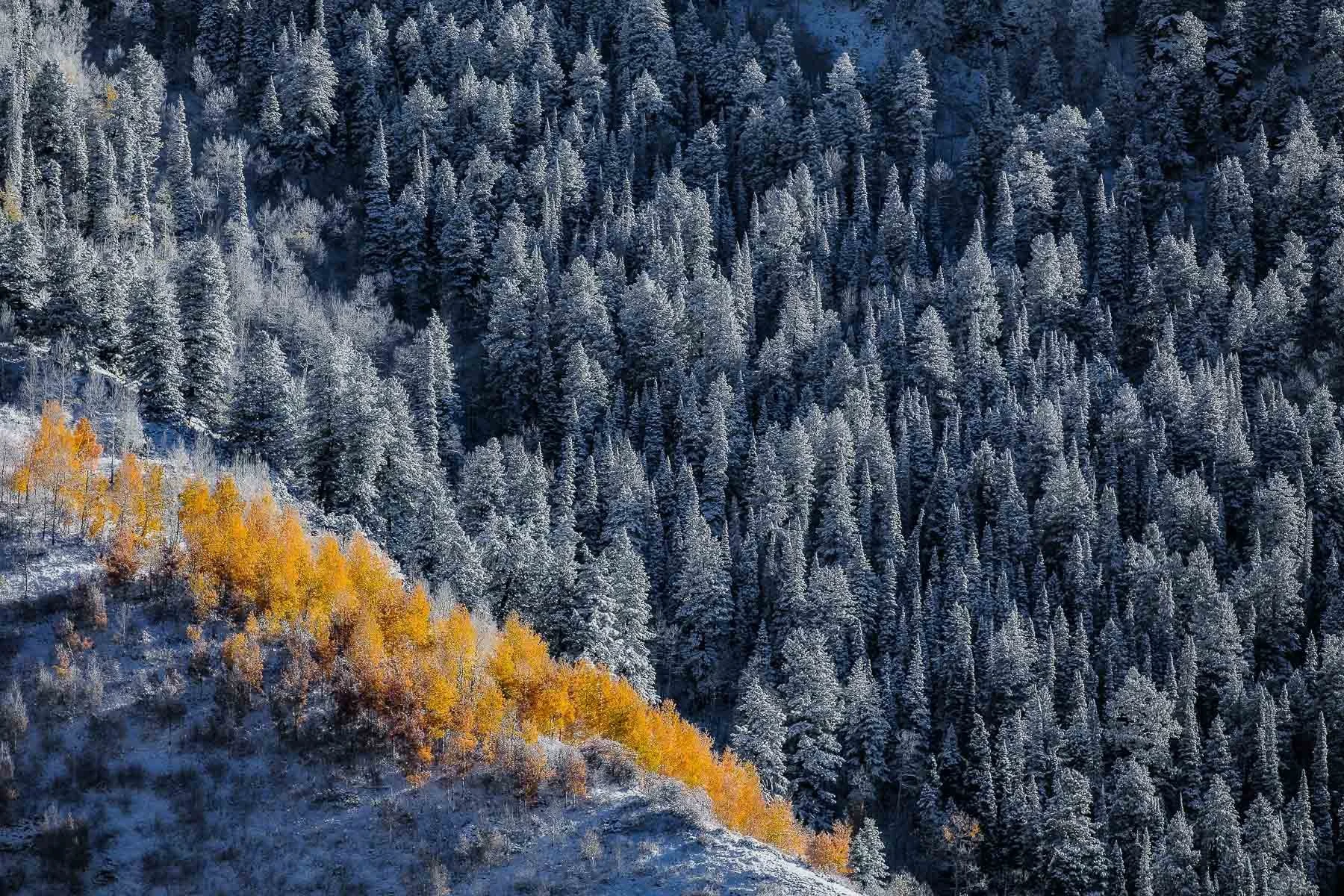
A wide-angle lens is useful for photographing large landscapes and immersive forest scenes, but a telephoto lens can be just as valuable during fall.
Longer focal lengths allow you to isolate sections of a mountainside, compress layers of aspens and mountains, and simplify scenes that might otherwise feel visually overwhelming.
When photographing fall colors, I often find myself looking for small compositions hidden inside much larger landscapes.
6. Don't Be Discouraged by Bad Weather
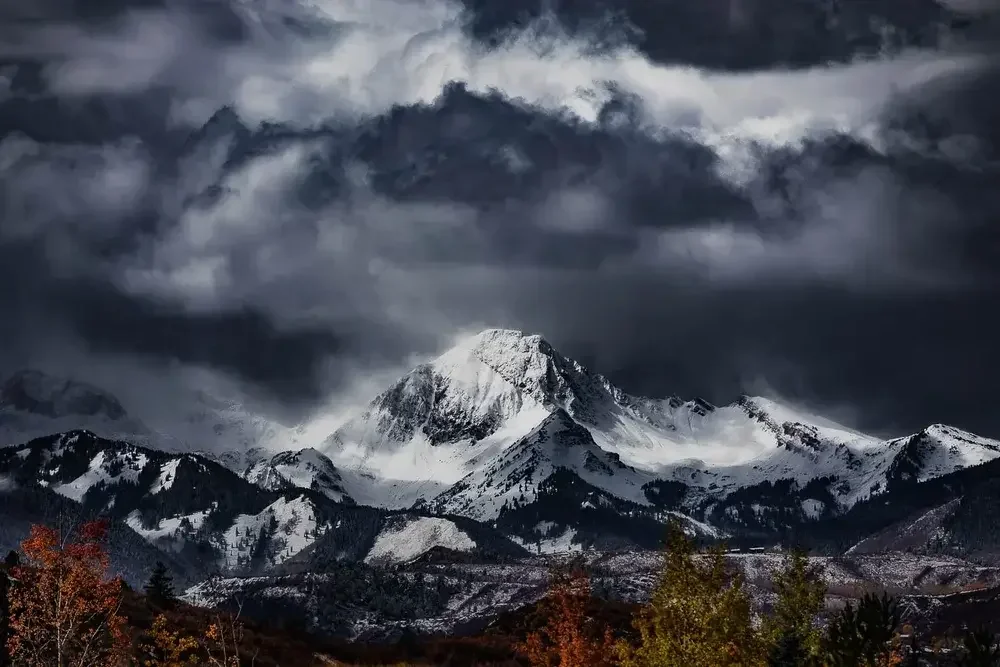
Some of the most interesting fall photographs happen when the weather isn't perfect.
Rain can deepen the colors of the forest. Low clouds can create atmosphere around the mountains. And an early dusting of snow above golden aspens can create one of the most classic scenes of fall in the Colorado Rockies.
Instead of waiting exclusively for clear blue skies, pay attention to changing weather. Dramatic conditions often produce much more memorable photographs.
7. Slow Down and Explore on Foot
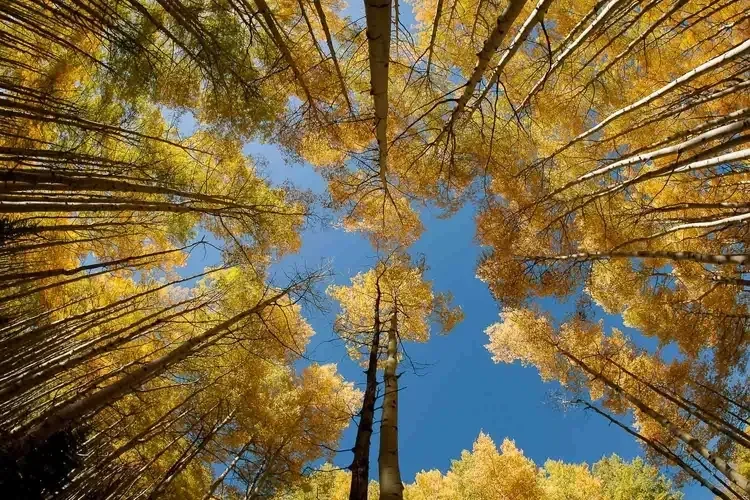
One of the best ways to photograph fall colors around Snowmass is simply to get out on the trails.
Walking gives you time to notice compositions you would never see from the road. Light changes constantly as you move through an aspen grove, and a scene that looks ordinary from one direction can look completely different just a few steps away.
Rather than heading out with one photograph in mind, I like to explore and see what the landscape gives me.
8. Try a macro lens
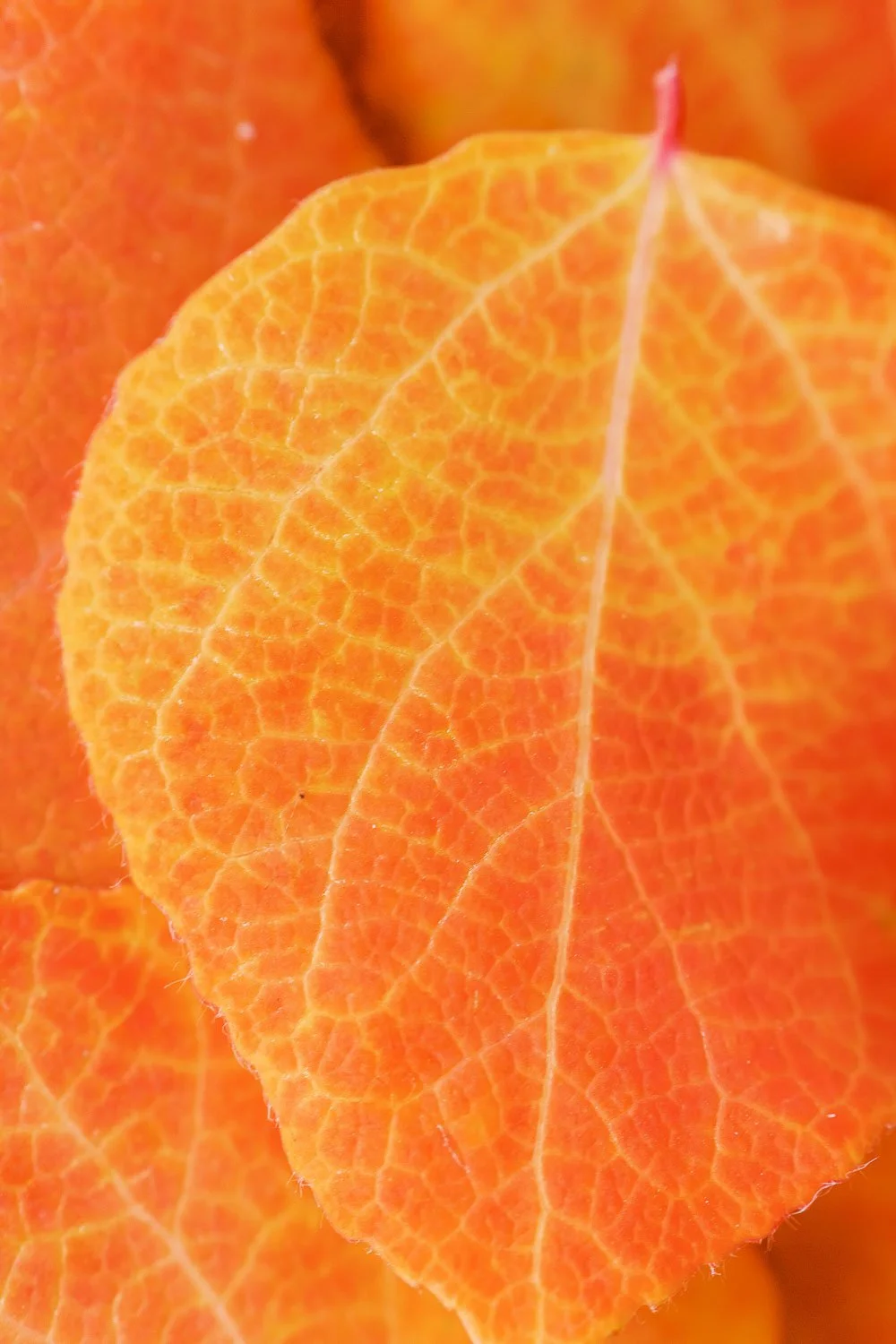
Changing colors of the leaves looks absolutely stunning when photographed with a macro lens. If this is a technique you’ve never used before, why not experiment with different leaf shapes and colors!
9. Don't Wait for the Exact "Peak"
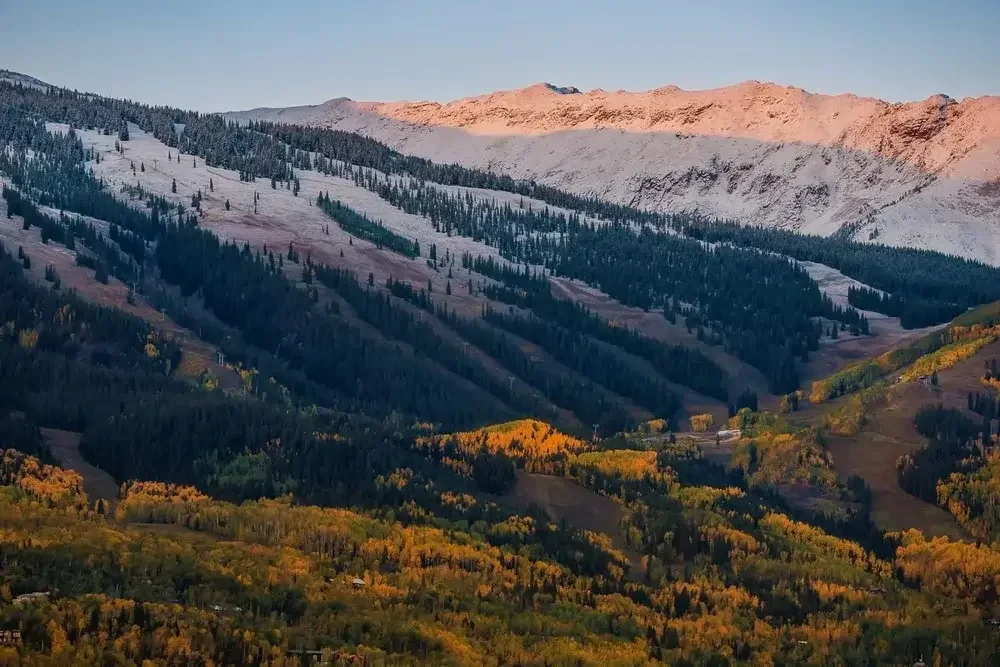
Everyone wants to know when peak fall color will happen, but there is no perfect date. In the Aspen and Snowmass area, fall colors typically begin appearing mid September, with different elevations and locations changing at different times.
This fall in particular is challenging with drought conditions and certain groves changing early. Get out, explore, and find the areas that are changing at different times. It is possible that we won’t have a very defined “peak” this year, so if conditions look beautiful, don't wait too long!
Photographing Fall in Aspen & Snowmass
Fall in the Colorado Rockies is fleeting, which is part of what makes it so special. No two years look exactly alike, and the combination of changing leaves, mountain light and unpredictable weather means there is always something new to photograph.
Many of the photographs in my fine art collection were created while exploring the mountains and trails around Aspen and Snowmass throughout the seasons.
Explore my Colorado fine art photography prints →
Explore my Snowmass photography collection →